Every September, hundreds of thousands of first-year students move into halls of residence across the UK. They’ll tour gleaming new libraries, state-of-the-art labs and well-equipped gyms. But when they open the door to their shared kitchen for the first time, the picture often changes. Chipped worktops, stained walls, broken extractor fans and fridges that haven’t been properly cleaned between tenancies are a common greeting.
Universities spend millions on facilities designed to attract applicants. Yet shared kitchens, where students prepare food daily and where the risk of foodborne illness is arguably highest, often seem like an afterthought.
Let’s take a closer look at why that gap exists and what a properly maintained kitchen actually requires.
What EHO Inspections Tell Us About University Catering
Environmental Health Officers (EHOs) inspect any premises where food is prepared or sold, and university catering outlets are no exception. Under the Food Hygiene Rating Scheme, inspectors score businesses from 0 (urgent improvement necessary) to 5 (very good) based on three areas: how hygienically food is handled, the physical condition of the premises, and confidence in management systems.
Most university-run cafes and restaurants score well. They have trained catering staff, documented HACCP procedures and regular deep cleans. But these same institutions often manage hundreds of shared student kitchens that sit outside the formal catering operation. These kitchens aren’t inspected the same way, and they don’t carry a hygiene rating sticker on the door.
That’s a problem. A shared flat kitchen used by six or seven students cooking daily is, by any practical measure, a food preparation environment. It’s just one that nobody is formally rating or holding to account.
Rats, Mould and Overflowing Bins: The Student Experience
The gap between a university’s public-facing facilities and its behind-closed-doors kitchens has been well documented. In 2024, the UK’s largest student accommodation provider faced legal action from hundreds of students across multiple cities. Complaints included rodent infestations, persistent mould, damp conditions and kitchens that hadn’t been properly cleaned before move-in day. One student reported seeing a rat in their kitchen and being told their flatmate might be keeping a secret hamster.
These aren’t isolated stories. Student forums are full of accounts of sinks permanently stacked with dirty dishes, raw meat juices dripping onto other food in overcrowded fridges and black mould growing on kitchen walls. Some students end up buying their own mini fridges and keeping all their cooking equipment in their bedrooms because the shared space feels too unhygienic to use.
The issue goes beyond student behaviour. While messy flatmates are part of the university experience, the physical infrastructure of many hall kitchens makes proper hygiene almost impossible to maintain. Painted walls absorb grease splashes. Damaged worktops harbour bacteria in cracks. Poor ventilation encourages condensation, which leads to mould. These are problems that no amount of cleaning rotas will fix.
What a Properly Fitted Kitchen Actually Needs
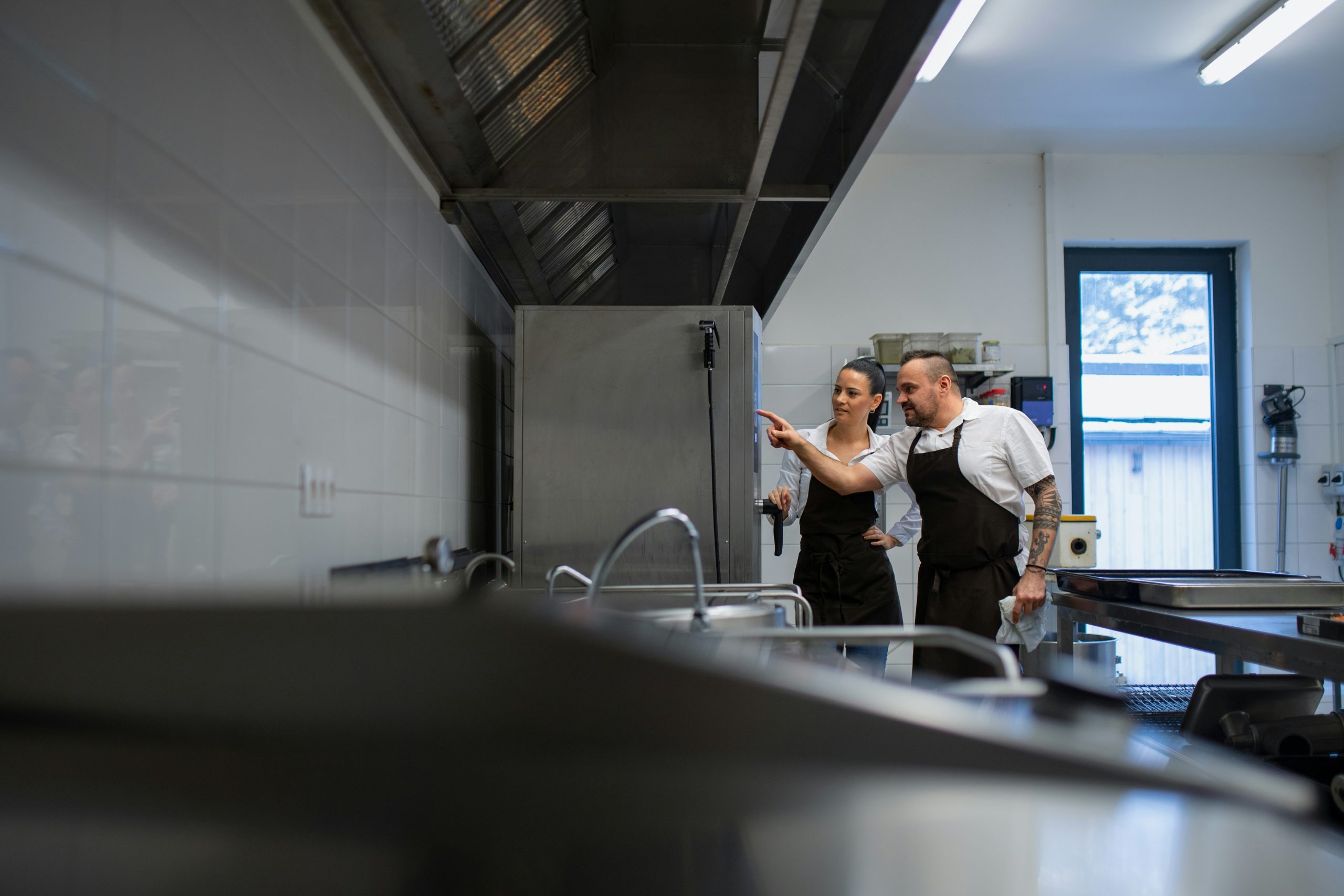
Under Regulation (EC) No 852/2004, any premises where food is prepared must have wall surfaces that are smooth, impervious, washable and in good condition. The same rules apply to floors, ceilings and work surfaces. In commercial kitchens, from hospital canteens to restaurant prep areas, these requirements are taken seriously. Walls are fitted with PVC white hygienic wall panels or stainless steel sheeting instead of paint or standard tiles. These materials are non-porous, resistant to mould and bacteria, and can be wiped down in seconds.
Floors are laid with non-slip, impervious coverings that slope towards drainage channels. Ventilation systems include hooded extract fans above cooking surfaces. Separate sinks are provided for handwashing, food preparation and equipment cleaning. The lighting is bright enough to spot contamination during cleaning.
Compare that with a typical hall’s kitchen. You’ll usually find painted plasterboard walls that stain and peel within weeks. Standard domestic-grade vinyl flooring. A single sink for everything. And an extractor fan that may or may not work. The contrast is stark, and it raises a fair question: if universities are technically running food preparation environments, why aren’t those environments built to the same standards?
Where the Responsibility Falls
Universities will argue, reasonably, that shared kitchens in halls are domestic spaces and not commercial ones. That’s technically correct. A flat kitchen shared by six students doesn’t trigger the same regulatory requirements as a restaurant or a hospital ward.
But the argument doesn’t hold up well under scrutiny. Universities charge significant rents for these rooms, often upwards of £7,000 a year for a basic self-catered room. They market their accommodation as safe, modern and well-maintained. And they have a duty of care towards residents, many of whom are living independently for the first time.
The practical solution doesn’t require turning every flat kitchen into a commercial unit. But it does mean investing in materials and maintenance that can actually cope with heavy, shared use. Hygienic wall cladding instead of paint. Proper ventilation that gets serviced regularly. Worktops made from non-porous materials. Pre-tenancy deep cleans that go beyond a quick wipe-down. These are standard expectations in any commercial food environment, and they’re not expensive or difficult to implement at scale.
Final Remarks
UK universities have made enormous strides in student wellbeing, mental health support and campus facilities over the past decade. But shared kitchens in halls remain a blind spot. The spaces where students are most likely to encounter foodborne illness risk are often the ones that receive the least investment and oversight.
The fix doesn’t require a regulatory overhaul. It requires universities to treat their kitchens with the same seriousness they give to every other part of the student experience. Better materials, better maintenance and better accountability would go a long way. Students deserve to cook a meal without worrying about what’s growing on the walls.