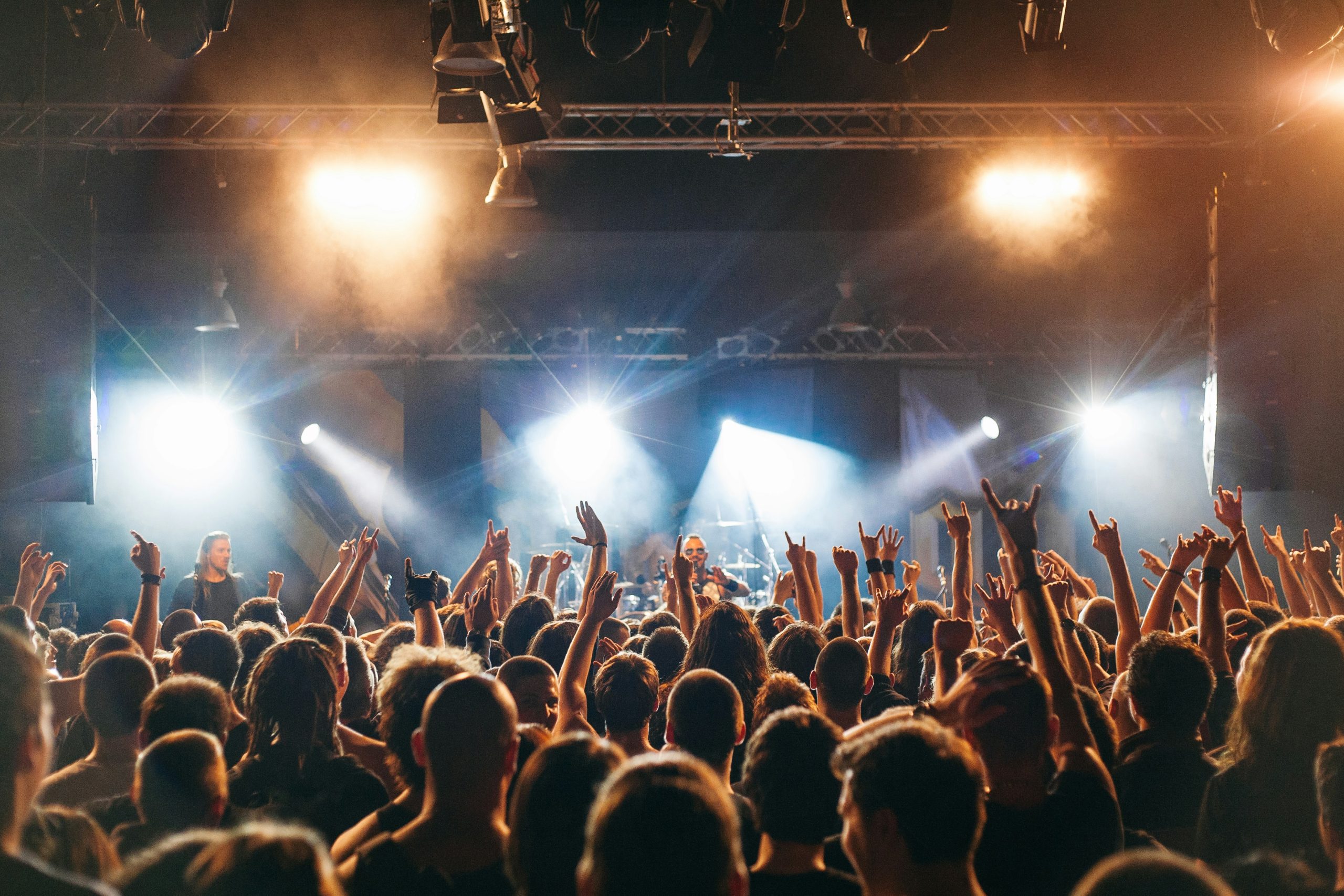
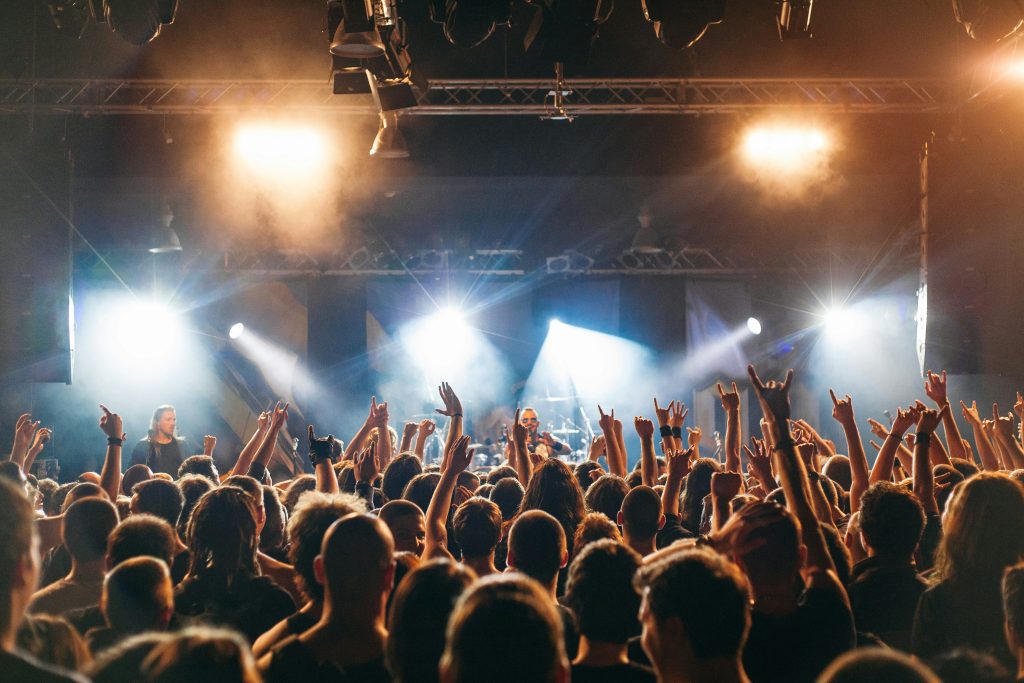
Every sensation you hear on the radio or read about online started out in the part of the building people forget to include when they overthink what Art and Culture Really Mean. This isn’t where anyone thinks It Happens, but it is, and always has been. It’s in a pub at the bottom of a chipped-paint staircase, in a hallway redolent of sweat and reverb. The foundations of the entire shaky edifice are scrawled on the walls in Sharpie by the bins. It’s right here, always.
Streaming pays almost nobody, so live music pays the bills
The math behind music streaming has been made public for many years, and nothing has changed for the benefit of musicians who are actually making a living out of it. A small percentage of artists receives the majority of streaming royalties, while the others share minimal amounts per stream. For the majority of musicians, streaming is not a source of income, but rather a way for people to discover their music. What truly pays the bills are live shows, merchandise, and tips.
This is why the live performance world has become an essential part of how musicians make a living. The journey starts with small venues that only fit 150 people, but these are willing to give an unknown band a try. These venues are part of the local music scene that leads the economic shift. Night after night, the “no one has ever heard of this band” situation plays out, long before any streaming service gets a whiff of the artist in question.
The grassroots circuit is the industry’s actual R&D department
Labels once sent scouts into regional scenes to find talent. Most of that is gone, replaced by algorithms sorting playlist data. But the discovery process is still there, it’s just moved underground, back to where it always worked best: independent promoters and small venue bookers taking financial risk on acts nobody’s vetted yet.
Those are the people absorbing the actual risk in this business. A booker who puts an unknown band on a weeknight bill isn’t booking a sure thing. They’re booking on instinct, relationships, and repeat crowds. That booking is what lets an artist go from open mic to a regular residency to opening slots on real tours. Every single step of that pipeline happens at the local level, and every step is unglamorous, underfunded, and largely invisible to anyone outside the scene itself.
Call it the R&D department the industry pretends it doesn’t need. Streaming platforms, festival promoters, and major labels all benefit from this pipeline without funding a cent of it. They wait for a local scene to produce something proven, then extract the value once the risk has already been absorbed by a 200-capacity room and the people who kept its lights on.
Regional identity is where new sound actually gets made
Genres do not appear out of nowhere. They emerge from the geography. The specific density of bands, clubs, and shared rehearsal spaces set the stage for the cross-pollination. Motown wouldn’t have happened without Detroit’s mix of musicians, writers, and a single label willing to put them all under one roof. Tampa Bay’s death metal scene would not have coalesced if a cluster of bands wasn’t trading members, sharing bills, and pushing each other toward heavier and more technical territory because that’s what the room rewarded.
You can’t stream yourself to that kind of regional identity. It requires proximity – musicians watching each other, competing with each other, borrowing from each other’s sets. Streaming flattens all of that into a genre tag. It can surface a song, but it can’t recreate the feedback loop that produced the song in the first place.
Venue fragility is a threat to the entire funnel, not just a local inconvenience
Physical spaces are essential, and they are more vulnerable than many people would think. Whether it’s soaring commercial rents, stringent noise regulations, or grappling with the repercussions of the pandemic, small music venues are constantly on the brink. NIVA reported that in 2020, 90% of its more than 2,000 members said they would permanently close without federal assistance. That is not a small issue affecting a smattering of rough-and-tumble bars. That is the overwhelming majority of the country’s small-show infrastructure saying it was one rough quarter from vanishing.
When a music venue shuts its doors, it doesn’t just disappear from a city block. It removes a key piece of the ladder from the talent pipeline. An artist loses a room to work out the kinks in front of a live crowd. A promoter loses a low-stakes space to try out an unknown artist before forking over stadium-level guarantees. A fan loses the place where they would’ve stumbled upon a band two years before the rest of their friends caught on. The entire funnel constricts, and the result is felt years later as a smaller, less diverse pool of touring talent.
Music tourism turns scenes into destinations
Fans are traveling more to take in an entire music culture instead of simply a one-off show. They want the whole ecosystem: the local record store, the dive bar with the sticky floor and the legendary sound, the rooftop spot with a rotating jazz lineup. That’s music tourism, and it’s grown into a real driver of local economies in cities that have leaned into their scenes rather than treated them as background noise.
Tampa Bay is a solid example of what that looks like when it’s working. The region has built a genuinely varied ecosystem, from intimate jazz rooms to storied rock clubs to metal venues carrying forward a scene that helped define an entire subgenre decades ago. Fans and visitors looking to actually explore live music in Tampa Bay can use a dedicated local guide to move through that ecosystem instead of guessing which nights are worth showing up for. That kind of resource does something that Billboard charts and streaming playlists can’t: it points people toward the rooms where the actual scene lives, not just the acts that have already broken out of it.
The economic multiplier extends well past the ticket price
Urban planners are beginning to realize what musicians have known for ages: concerts are a solid generator of non-performance-related revenue. People go out to eat before a show. Grab a drink after. Then there’s parking, maybe a rideshare, even a hotel room if the venue is out-of-town. One night at a midsize club can keep the lights on at a dozen neighboring businesses that have no share in the music itself.
This is called an economic multiplier. It’s what makes a local music scene an important part of civic planning, not just a fun thing in your city. Restaurants near working venues see the same lift on music nights over and over. Bars are packed before the first note. Hotels in cities with healthy scenes learn to expect guests who’re here for the show. None of this registers if the engine causing it goes silent.
Superfans are built in small rooms, not on streaming platforms
The dynamic between an artist and a supporter transforms completely once it’s in person. A supporter who comes across a musician on a streaming service may stream several songs and leave it at that. A supporter who experiences that same musician at a small venue, buys a shirt directly from the drummer after the set, and gets remembered by name the next time they show up, becomes something else entirely. That’s a long haul supporter, and that’s the best shot at a lifelong relationship a musician will ever have.
These audiences cultivate that devotion through proximity. They keep coming back. They play the record for their roommates. They have the artist sign their ticket stub. For every single musician, that face-to-face relationship is more valuable than an article in a blog, because it’s more reliable than any single post getting boosted above the others on an app. It’s based in actual reality, over many occurrences, in a specific location.
Technology helps the scene, but it can’t replace it
Social media and digital platforms have simplified our ability to hear about shows, track local artists between releases, and foster a scene that previously depended entirely on flyers and word of mouth. This is an unequivocal good, and nobody serious is suggesting musicians should ditch these tools.
But the amplification only works if there’s something real underneath it to amplify. A social post about a show doesn’t drive a single dollar of the economic activity described above. It only drives bodies through the door. The value is still in the room, live, in front of the people who made it out. Technology is the megaphone. It’s not the stage.
What actually helps, if you want to be part of this instead of watching it from the outside
None of these actions require extravagant moves; they just require your presence. Instead of waiting six months to see the big show, go see the local gig now. Pop into a small bar or venue you’ve never tried on a weeknight. Instead of ordering that band shirt after you’ve checked out the new album, grab it directly from merch. Give independent promoters more of your social reach. Take a risk on a local night you’ve never been to.
The industry talks about itself in terms of charts and streams and stadium grosses. That’s the downstream stuff. Tonight, upstream, there’s a tiny hall or studio or community center you drive past all the time where someone’s making the case for a passion that might sell forty records today, but will sell a handful of 25,000-seat shows in five years. That hall is where invisible money meets hungry ears.