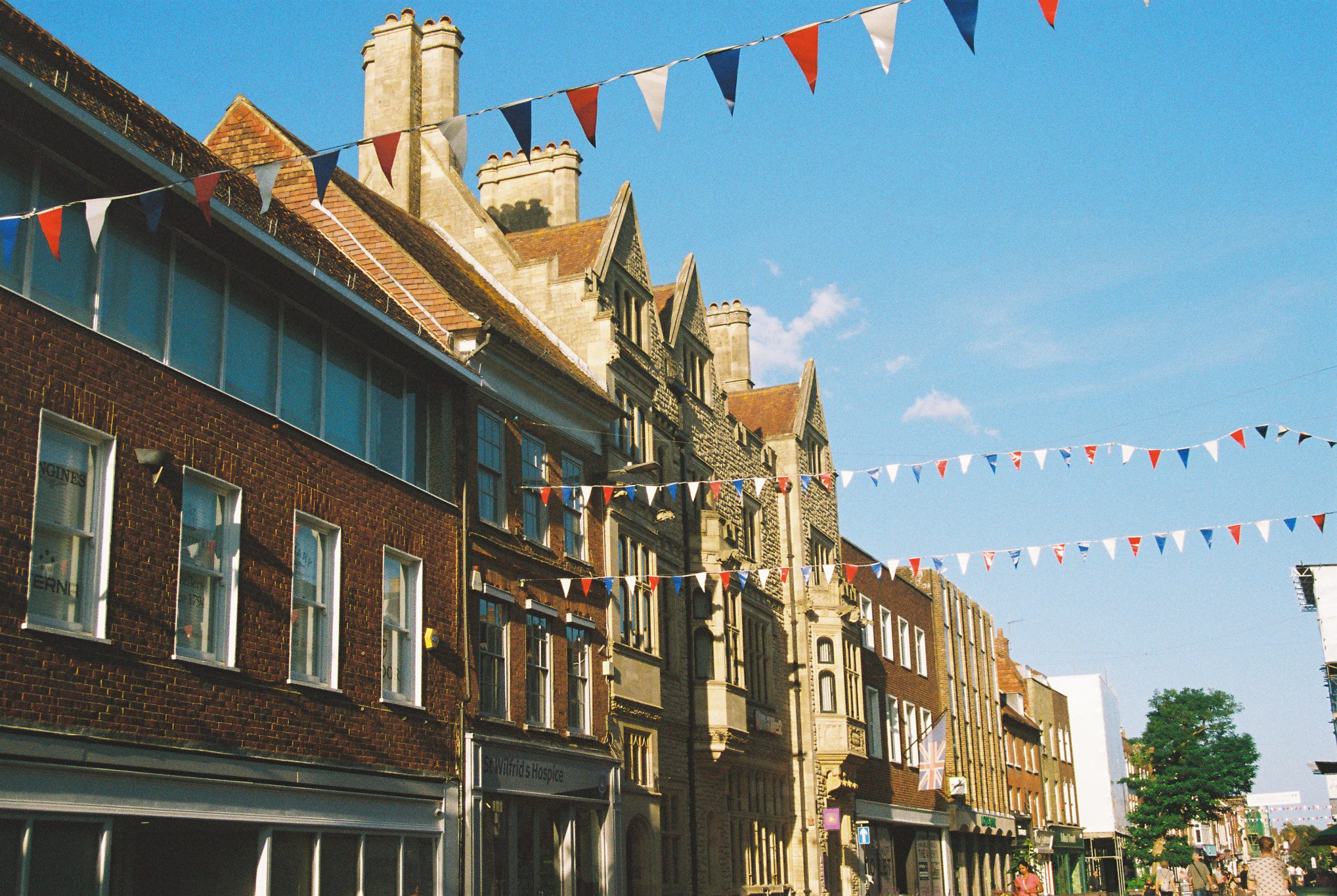
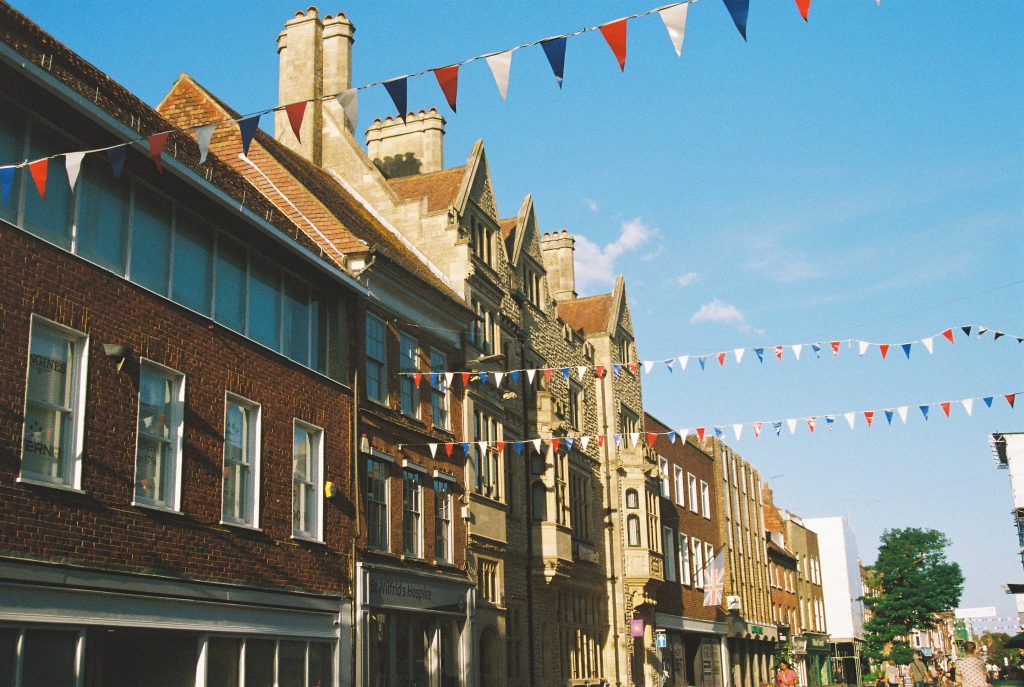
I took a roll of Mr Negative Fragile 400 away with me to Chichester and Emsworth, which turned out to be a rather good accidental test of it.
I say accidental because I wasn’t setting out to test the film.
I simply wanted a roll in the camera.
We were away for a night, wandering around Chichester, exploring Emsworth and staying at The Ropemaker, and Fragile came along for the ride.
And it got used for pretty much everything.
Outside in daylight. Inside the hotel. Bright bits. Shadier bits. Architecture, streets, details and whatever else caught my eye.
Which is probably a much better way to judge a film than spending a day photographing the same thing in perfect conditions.
Fragile is a 400 ISO colour negative film, so it immediately feels like a useful everyday film. There’s enough speed to give you some flexibility, without having to think too hard about what the light is doing.
And that proved to be the case.
Out in Chichester, it handled the daylight beautifully. The colours have a lovely richness to them without becoming cartoonishly saturated, and I particularly liked the blues. They have a depth to them that works really nicely with skies and water.

Then we went inside.
This is where I was perhaps more interested in what it would do, because indoor light can expose the limitations of a film pretty quickly.
But again, it did the job.
The photographs I took inside The Ropemaker came back nicely exposed and with pleasing colour. Nothing looked horribly muddy or like I’d asked the film to do something it really didn’t want to do.
It just quietly got on with it.
And I think that’s what I liked about Fragile.
It isn’t demanding.
Some films seem to have very definite opinions about what you should photograph and how you should photograph it. They want beautiful golden-hour light or carefully considered exposures.
Fragile seems much happier with let’s see what happens.
Which suits the way I photograph.
I’m not generally wandering around with a light meter obsessing over every frame. I want to be able to see something, lift the camera and take the photograph.
I want the film to cope with that.
And this did.
The name still makes me smile, because there is something wonderfully contradictory about calling a film Fragile when it actually proved to be rather dependable.
I put it through a mixture of conditions over the weekend and didn’t find myself thinking, Oh, I really shouldn’t have used this film for that.
It handled the outdoors.
It handled the indoors.
It handled the slightly duller light.
And most importantly, it produced photographs that I actually liked looking at.
That’s ultimately what I’m after.
I’m not particularly interested in whether a film is technically the sharpest or has the finest grain or can produce colours that are supposedly true to life. I want photographs that have a feeling to them.
And Fragile has that.
There is a lovely film softness to the images, while the colours still have enough life in them to make them interesting.
Would I use it again?
Yes, definitely.
In fact, I think that’s probably the biggest compliment I can give it.
I didn’t spend the weekend thinking about the film.
I just photographed.
And when the scans came back, I was happy with what I’d got.
Sometimes the best films are the ones that don’t get in the way.
Fragile might have a name that suggests it needs handling with care.
My experience was rather different.
It just came along for the weekend, coped with whatever I threw at it, and quietly got on with the job.