You may have seen the Catch Camera popping up on your social media feeds. It seems to be everywhere at the moment.
And rightly so, quite frankly.
I’ve been shooting film every day for a good while now, so I’m a bit wary of anything that’s being pushed at me between recipe videos. But my first roll from the Catch is back, and I can tell you it’s the real thing.
For the money, it is solid.
Let’s start with what you get. The camera, the film and the developing all come in one price. You shoot your roll, it goes back to be developed, and the scans come to you. (You can of course just buy the camera, or the camera and film for a cheaper option).
Camera.
Film.
Developing.
One price. What’s not to love?
Anyone who shoots film will know the quiet arithmetic that goes on in your head. The roll, the lab, the postage, the little wince at the end. I don’t mind it, it’s part of the fun for me and I have a fabulous lab that I love to support. But for anyone who’s curious about film and doesn’t want to work all that out first, this takes the whole question away. You just pick it up and start.
Then there’s the camera itself.
It looks like a proper camera. Grey and cream, with a lovely cream corduroy strap, and it feels like a proper camera when you hold it, not a toy pretending to be one. I’m fussy about that. If a camera feels flimsy, I don’t trust it, and if I don’t trust it, I don’t take it out.
This one comes out.
It’s focus-free, with a 28mm lens. Nothing to set, nothing to fiddle with. You look through the viewfinder, frame it up, press the button and wind on. That’s it.
I’ll admit I wondered whether that would bother me. I like a bit of control.
It didn’t.
If anything, it was a relief. Without anything to adjust, I spent all my attention on what was in front of me, which is really the whole point.
So, the important bit. Does it actually take a good picture?
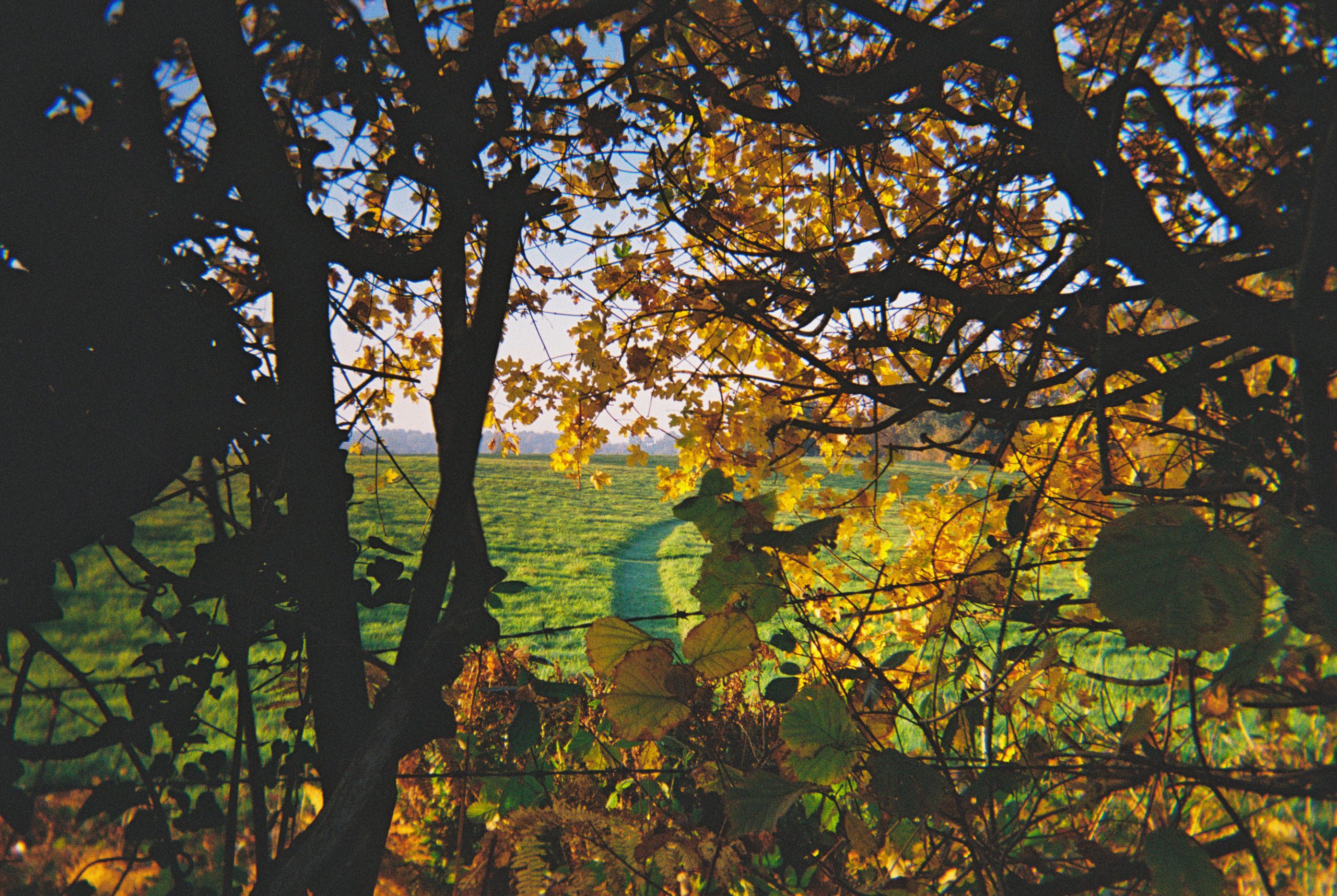
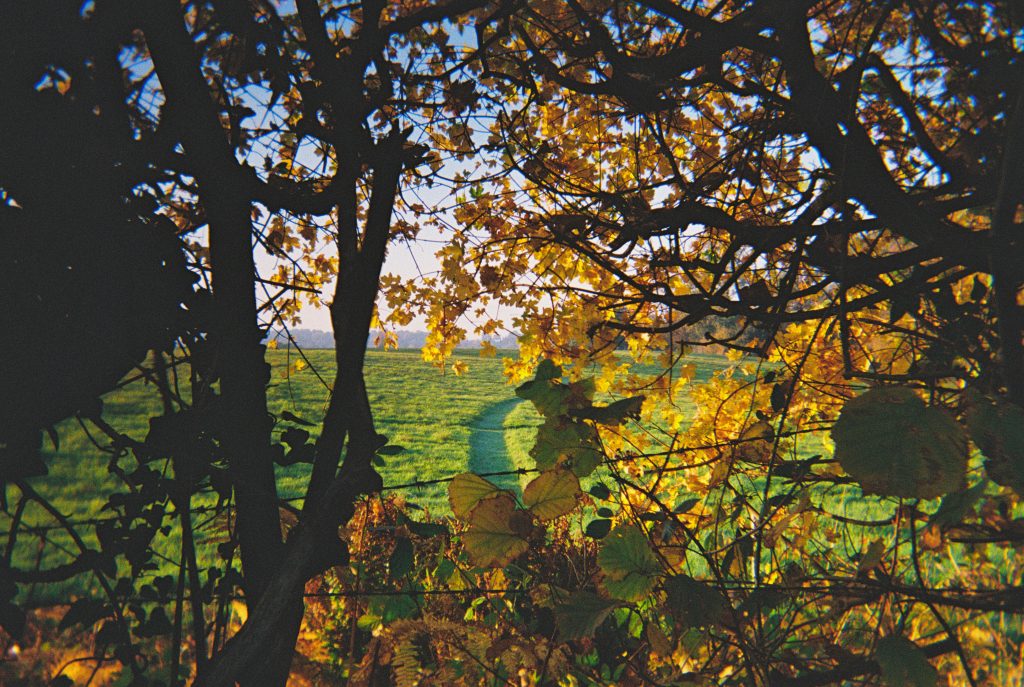
This is one from my first roll.
A gap in an autumn hedge. Dark branches all round the edge, leaves gone every shade of butter and gold, and through the middle a bright green field with a little path worn across it, heading off towards the hills. The sun was low and coming in sideways, lighting the leaves up from behind.
That’s quite a lot to ask of a simple camera. Bright sky, deep shadow, and a lot of fiddly detail in between.
It coped.
The colours are warm. The greens are proper greens. The sky hasn’t blown out, and the shadows haven’t turned to mud. It has that soft, slightly dreamy film look that I love, without being blurry or muddy.
Here are a few more from the same roll.
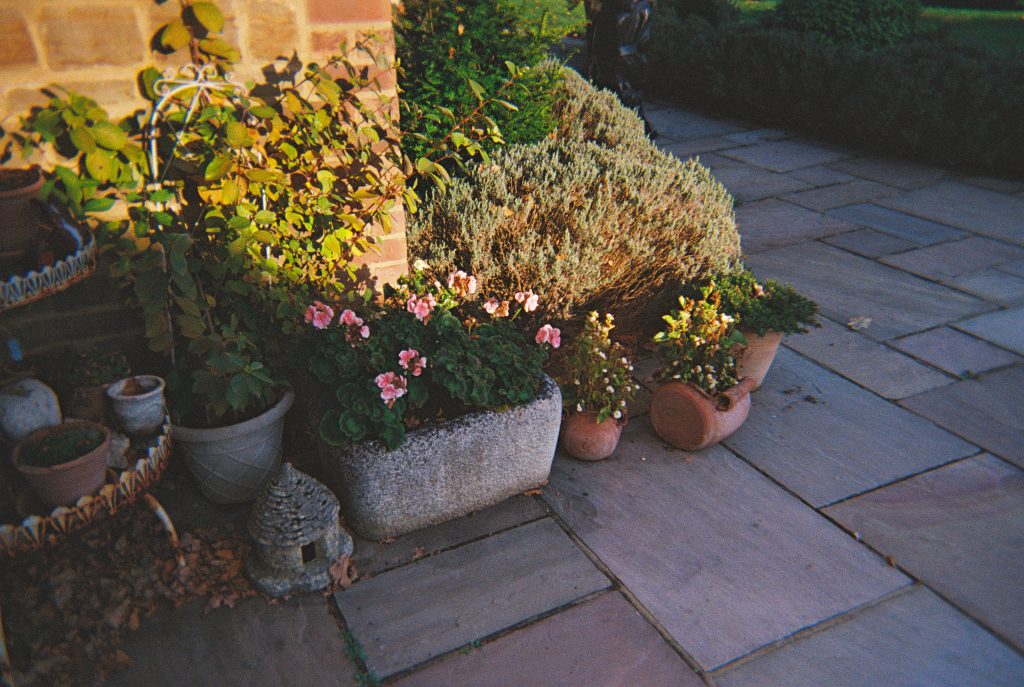
A corner of my mum’s garden in the low sun. A stone trough full of pink geraniums, a gaggle of terracotta pots, one of them lying on its side and planted up anyway, a big silvery lavender, and a little stone house tucked in at the front. The light caught the brick behind and turned it the colour of honey.
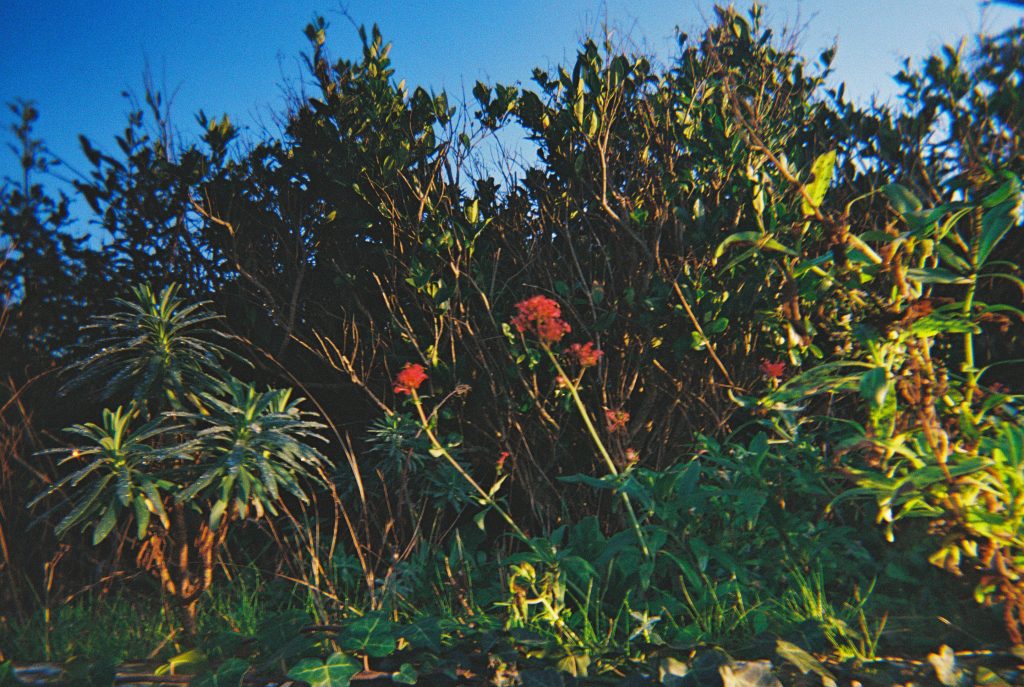
Looking up into a tangle of hedge against the bluest of skies, with a few bright red flowers poking through and ivy creeping along the bottom. I didn’t expect that blue. It’s almost too much. I love it.
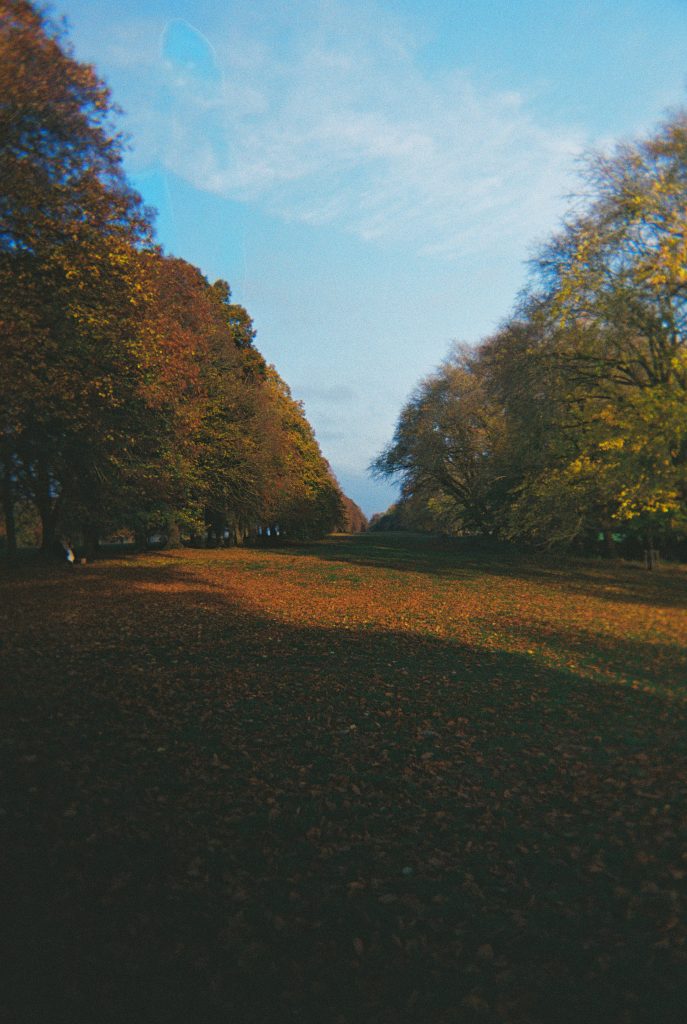
A long avenue of trees going every shade from green to rust, with the ground underneath carpeted in fallen leaves and the shadows stretching right across it. If you look at the top left, there’s a soft blue smudge in the sky. A little light leak or flare, the kind of thing film throws in now and then. I don’t mind it one bit. It’s film being film.
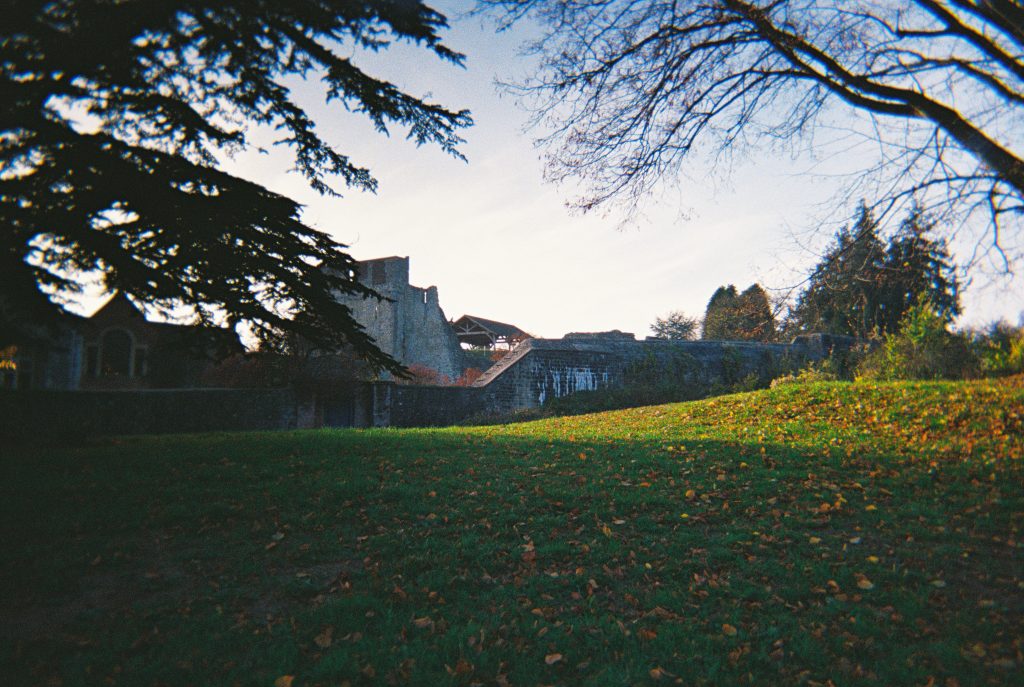
And some old stone ruins at the top of a grassy bank, framed by dark branches on one side and bare ones on the other. This is the one where you can see the camera’s limits. With the sun behind the trees, the shadows have gone very deep, and the foreground is darker than I’d have liked. In tricky light it leans dark rather than bright. For a camera with no settings at all, I’ll take that.
Would I recommend it?
Yes. If you’ve been eyeing one up on your feed and wondering whether to try film, this is an easy, friendly way in. And if you already shoot film, it’s a lovely little thing to keep in a bag for the days you don’t want to think, you just want to look. It’s almost the same price as a disposable camera, but it’s better for the environment because you can use it time and time again.
It didnt cope well with indoors, but then that is because I didnt use the flash, and used their supplied film. Next time I will try my trusty Kodak 400 and stick the flash on for hopefully better results.
I liked it so much that I’ve got six more. We’re off to Stockholm with friends in a few weeks, and everyone’s getting one. They’ll shoot all weekend, keep their camera, and I’ll turn the scans into a photo book. More on that when the films come back.
For now, I’m just pleased my first roll came back looking like this.