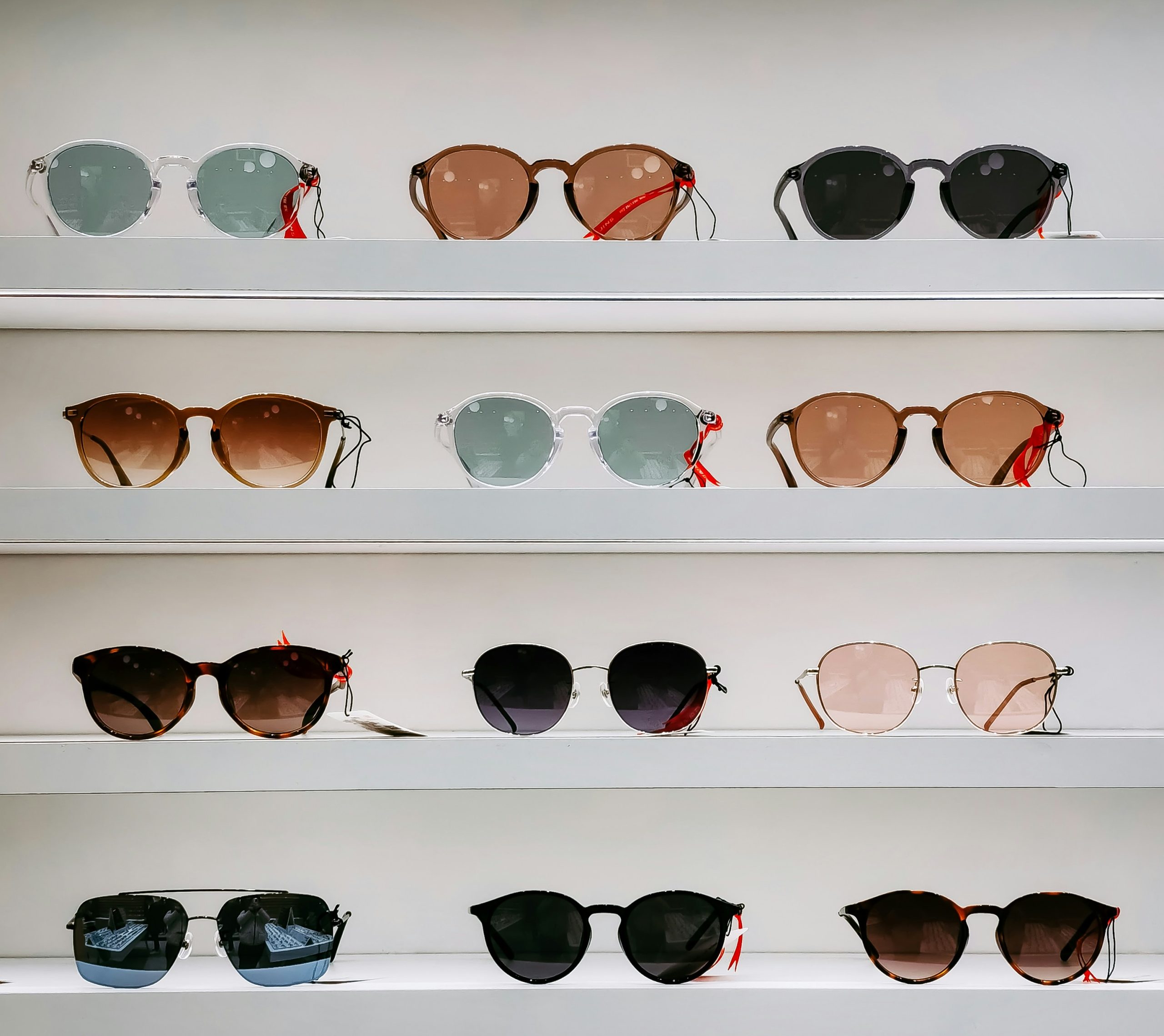
You spent real money on those frames. Maybe they’re Ray-Bans you’ve worn for three years, or Oakleys that fit your face perfectly. Your prescription changed. Now you’re staring down the choice between abandoning frames you love or figuring out if new lenses can go in them.
The answer? Most of the time, yes. You can put new prescription lenses in Ray-Ban, Oakley, and most designer frames, but it’s not one-size-fits-all. Frame shape, material, and lens type all matter, and knowing the rules upfront saves you from a costly mistake.
How Lens Replacement Works for Designer Frames
If you are considering replacing your lenses, the best lens replacement service providers remove your existing lenses, use them as templates to cut new prescription lenses to the exact same shape, and press or secure the new lenses into your original frame. Straightforward enough, right? But designer frames introduce variables that a standard optical lab has to work through.
Ray-Ban Frames: What You Can and Can’t Replace
Most Ray-Ban frames accept new prescription lenses without a problem. The Wayfarer, Clubmaster, and Aviator styles all have standard acetate or metal constructions that labs work with constantly. Here’s the thing, though: Ray-Ban’s polarized and gradient lenses are proprietary. You won’t get an identical lens back, but you can get a high-quality aftermarket equivalent in the same size and shape.
One thing to watch, Ray-Ban’s wraparound styles (like the RB4068) have a pronounced base curve. Your new lenses need to match that curve, or you’ll get distortion at the edges. A competent lab will measure the original lens and match it.
Oakley Frames: Prescriptions in High-Performance Designs
Oakley gets more technical. Their frames use proprietary lens shapes and often have a high wrap angle, sometimes with an 8 or 9 base curve. Standard ophthalmic lenses top out around 6 base curve; getting a prescription in a heavily wrapped Oakley frame requires a lab that handles high-base-curve work.
But many Oakley styles, the Holbrook, Frogskins, and Latch among them, sit relatively flat and behave like standard frames. Don’t assume your Oakleys can’t be done. Check the model first.
Other Designer Brands and Rimless Frames
Prada, Dior, Gucci, and similar acetate-heavy designer frames usually present no issues at all. The frames are well-built; the lens shapes, though sometimes large or unusual, are manageable for any experienced lab.
Rimless and semi-rimless frames? That’s different. These use drilled holes or a nylon cord to hold lenses in place, so the lab has to drill new holes or thread new cord precisely. It’s doable, but it demands care. A poorly drilled lens can crack. If your rimless frames come from a high-end brand, make sure the lab has specific experience with that style before handing them over.
What Actually Determines Whether Your Frames Can Be Re-lensed
A frame’s re-lens potential hinges on a few physical factors. The condition of the frame matters far more than the brand name.
Frame Condition and Structural Integrity
Old, brittle acetate cracks under the pressure of lens insertion. Metal frames with worn hinges or bent temples can warp further during the process. Before a lab accepts your frames, they’ll check whether the frame can handle the work. If the temples are loose or the nose pads are corroded, fix those first.
The lens groove, the channel around the inside of the frame where the lens sits, has to be clean and undamaged. A chipped groove means the new lens won’t seat securely.
Your Prescription Strength and Lens Thickness
Strong prescriptions produce thicker lenses. A thin, small frame can’t always hide a high-power lens. If your prescription is above +/-4.00 diopters, you’ll want high-index lenses (1.67 or 1.74 index) to keep thickness down. Most labs offer these, but they’ll cost more than standard 1.50 index plastic.
The frame’s eye size matters too. A larger lens opening means more lens material; that means more visible thickness at the edges for minus prescriptions and at the center for plus prescriptions. Smaller frames generally look better with strong prescriptions.
Lens Add-Ons: Coatings, Tints, and Polarization
You can add anti-reflective coating, UV protection, blue-light filtering, and polarization to new lenses regardless of the frame. These aren’t frame-dependent. The only constraint is what the lab stocks. Most quality labs carry all standard coatings, and you can often get photochromic (light-reactive) lenses in your designer frames, too.
And tinted lenses? Available for any prescription. Want your Ray-Bans done as prescription sunglasses in a specific color? That’s a straightforward request.
Conclusion
You can put new prescription lenses in Ray-Ban, Oakley, or any designer frame in most cases. The brand rarely blocks the process; frame condition, lens prescription strength, and the lab’s technical ability do. Before you buy new frames, check whether re-lensing your existing ones makes more sense. In most cases, it’s faster, cheaper, and you keep the fit you already know works.