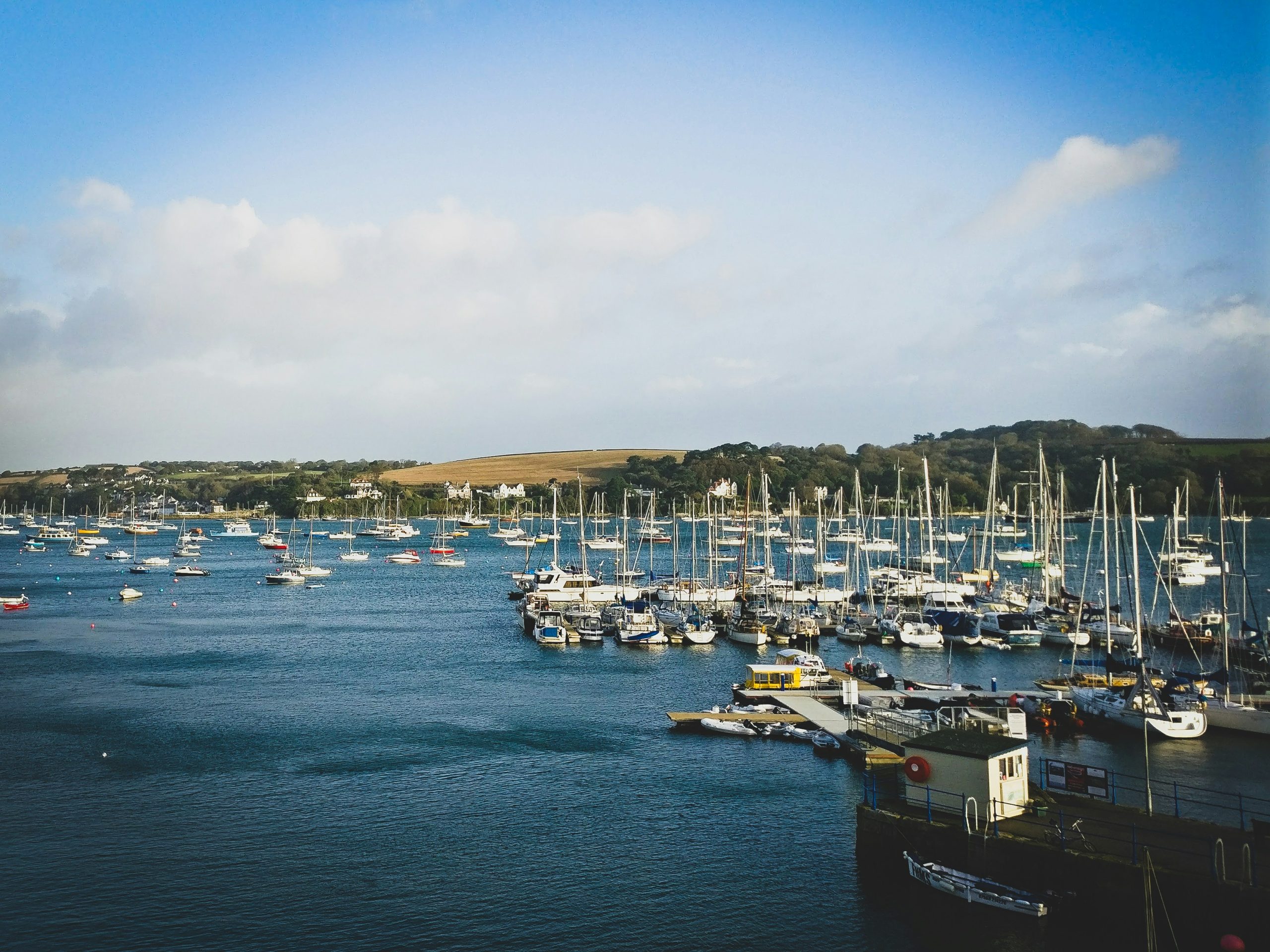
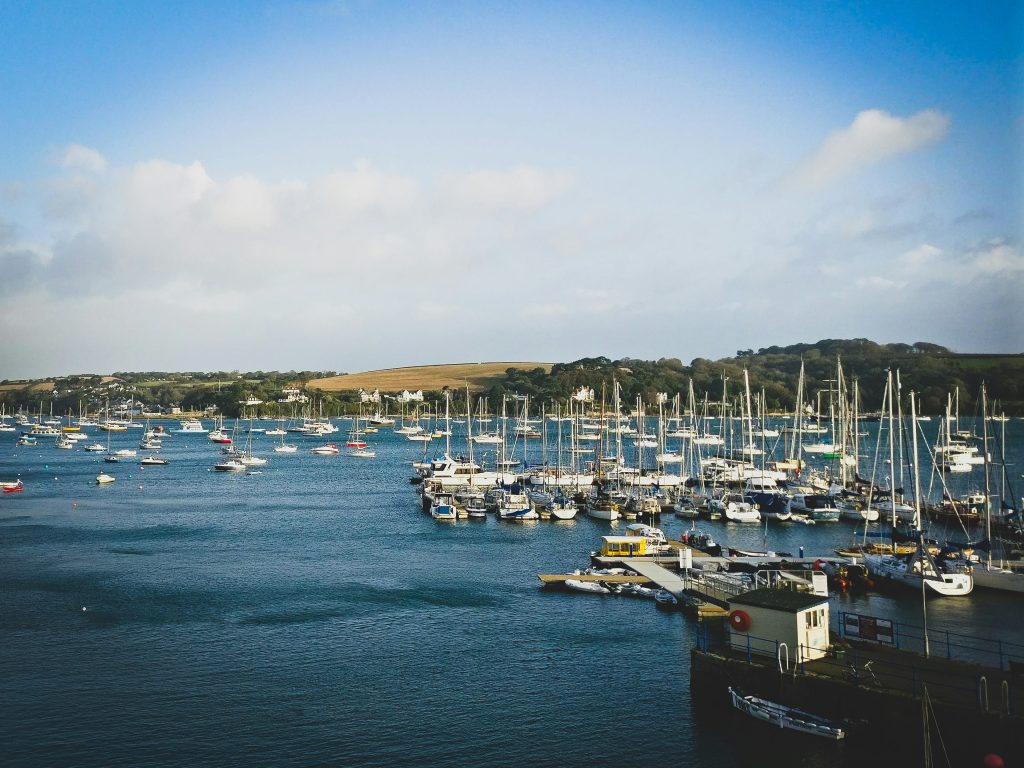
For most people, Cornwall is a county to cross, from village to village, beach to beach, washing little bits of it off when it’s time to go home. Falmouth’s different. Beautiful, yes. But inhabited, bustling, a place to live as well as a place to come on holiday.
Arriving and Getting Around Without a Car
One of the few coastal getaways where you really are better off chugging into town by train, the branch line from Truro disgorges you in the middle of things. And for the next seven days or so, you really won’t need a car. The ferries and boats will do the heavy lifting, crossing the Carrick Roads regularly during daylight hours, with some really good bits of the South West Coast Path and beaches either side.
That said, the tides dictate life on water so do check the seasonally fluctuating departure times for some routes on arrival, and that heavy Falmouth rainfall could make some of the more difficult paths near Maenporth and Swanpool tricky. For the dog-burdened or toddler-towing, this setup is far easier compared with parking during high summer. The streets are narrow and the seafront congested, so you are better off parking your wheels for the week and blowing away the cobwebs afloat and on foot. You’ll get your fill then too.
Strategic Accommodation: Why Self-Catering Makes Sense Here
A week in Falmouth, any substantial week on the British coast, in fact, is a different proposition than a city break. You are coming back wet from the beach with sandy children who need feeding before they’re presentable in public, a dog demanding another walk, and a wetsuit that needs rinsing and drying. A hotel room doesn’t really absorb any of that.
Self-catering handles it much better. You can fling the wetsuit over the washing line in a utility room, stick the muddy shoes in a porch, and put the children straight into a bath without having to think about anyone’s dinner, because you didn’t have to last-minute book a table for six in a town where you don’t really know which restaurants cater best for sandy children.
Families and multi-generational groups in particular find it liberating to be able to separate themselves like this, and according to visitor data from Visit Cornwall, while the number of nights people book self-catering for has gone down, the volume of bookings themselves has gone up, suggesting that this format is increasingly desired for certain types of trip. The places to stay in Falmouth range from small town-centre cottages within walking distance of the ferry to larger properties near the beaches, different setups suit different groups, and it’s worth being specific about what your week actually looks like before you book.
Days 1-2: Maritime History Along the Waterfront
Begin at Discovery Quay. The National Maritime Museum Cornwall is housed in a striking modern building that stands directly on the waterfront. Do not be fooled by its size, you cannot see everything it has to offer in just one morning. The museum covers the relationship between Cornwall and the sea in minutiae; covering topics such as fishing, navigation, boat-building, and the history of the Carrick Roads which, due to an accident of nature, is one of the deepest natural harbors in the world. Visit the lookout tower and the underwater tidal gallery at the basement level, this interactive space in particular appeals to youngsters. This will easily occupy your whole morning.
After a hearty lunch, prepare to walk up to Pendennis Castle. This Tudor fortress was commissioned by Henry VIII to protect the estuary. The view from the headland, over the Carrick Roads, and out to the wild Atlantic puts everything else you’ve seen so far in perfect geographical context. The 20-minute walk from the town center will help work off some of those holiday calories and will prove to be invaluable.
On day two you should be ready to hit your stride, walking from the Prince of Wales Pier along the seafront, popping in and out of some of the galleries on Arwenack Street, and maybe even taking a boat out for the rest of the week.
Days 3-4: Beaches, Sea Kayaking, and the Coast
Falmouth has 3 main beaches and they’re disparate enough to tempt multiple visits. Gyllyngvase is the largest and most accessible, clean sandy water, a decent beachside café, paddleboard and kayak hire onsite in season. It can get crowded but summer bathing in August is still OK.
Swanpool, 10 minutes’ walk south, could be the most kid-friendly, behind the beach is Swanpool Nature Reserve, a brackish lagoon that’s typically wonderful for children’s rockpooling. It gets some waves but is protected from the worst of the surf, and the crowds are manageable enough for teenagers as well.
Maenporth, another mile on, is the quietest and easiest for swimming. The footing here is as sandy as the water but it’s surprisingly peaceful even a hundred meters out. From Falmouth Hotel, the walk west past Pendennis Head to the 2nd/3rd beaches is invigorating and views are sensational.
Falmouth is also a good place to take up sea kayaking. The estuary here is just so safe and still, despite the reputation Carrick Roads has for being swept by tides. Treat it like a sheltered harbor and you’ll be fine, but do keep an eye on the wind forecast if you’re heading outside the fleets of yachts.
Day 5: The Ferry to St Mawes and the Roseland Peninsula
Hop on the St Mawes Ferry located at the Prince of Wales Pier. The journey lasts approximately 20 minutes and there are multiple departures each day. While crossing, you’ll be amazed by the view of Falmouth from the estuary.
St Mawes is a very small village, essentially it’s a harbor with a waterfront road around it, and a castle at the far end. St Mawes Castle is another one of Henry VIII’s big guns, contemporaneously built with Pendennis on the other side of the estuary. The castle gardens are amazing and the view back down the estuary, and of Falmouth, in miniature, directly across from Pendennis, is spectacular, particularly if you make the short walk up to the battlements themselves.
The Roseland Peninsula to the east is one of the quietest places in the county. You’ll find nice cliff walks, tiny old lanes with grass up the center, and beaches near Portscatho that aren’t on the tourist map at all. You could easily spend a pleasant day walking around this part of the coast.
Day 6: Trebah, Glendurgan, and the Gardens of the Helford
Both Trebah and Glendurgan are within day-tripping distance of Falmouth, or you can give one a day or afternoon to itself. Situated in steep-sided ravines that reach down to the Helford River, they’re able to support exotic species thanks to the south coast’s microclimate, warmth brought by the Gulf Stream, minimum frost, high humidity from the river.
Trebah has a beach pretty much at the bottom of the garden; Glendurgan, a National Trust site, has a maze of cherry laurel that’s 180 years old. If you’ve got kids, the maze alone will keep them busy for hours. If you haven’t, and you’re a walker, Trebah is the spot to aim for.
Day 7: Falmouth’s Creative Side and Independent Food
Falmouth is connected to a working art school, and you see the evidence of that in the town in genuinely observable ways rather than just being told about it in a sales pitch. The independent galleries on the high street and Arwenack Street show local work, much of it produced by people who live and work in the town rather than those that just sell their wares there.
Which makes the last day of the week a good one to properly slow down on. Meander the galleries, locate one of the artisan bakeries for a late breakfast, and start to wander through the historic streets without any great purpose. The sustainable seafood places near the quay are worth aiming for at lunch, oysters when they’re in season, crab almost all year round.
If it’s October check your dates; the Falmouth Oyster Festival takes over the waterfront and sees the old oyster dredge boats come under sail into the harbor to tie up. It’s the sort of local occasion that doesn’t really put on a show for the tourists, it’s too genuine a link to the town’s working history for that.
Choosing Your Season
Summer in Falmouth can be pretty hectic, with lots of things going on. Falmouth Week, which happens every July or August is a big sailing regatta that fills the harbor with racing yachts and the pubs with crew. If you want some hustle and bustle and don’t mind sharing your fun, then summer is the time for you.
Spring and autumn are different again, with a noticeable absence of crowds. The coastal paths are much quieter too, and the gardens at Trebah and Glendurgan are magnificent in spring bloom and autumn colors, so much that they’re worth visiting twice across the year. The sea stays swimmable into October thanks to the warmer inshore temperatures along the south coast.
Winter is its own deal, a slow, grey, introverted time, with the sort of subdued seafaring melancholy that strikes a chord with coastal types and artists the world over. The town doesn’t shut down like some places, and the drama of the Carrick Roads in grey weather has a particular quality that’s hard to argue with.
Falmouth rewards people who give it time. A week is enough to actually understand a place rather than just visit it, which is the difference between a holiday and the kind of trip you end up talking about a year later.